The Black Pine team spends a lot of time thinking about and designing buildings, but architecture doesn’t stop at the walls. It spills out into the landscape, shaping how we live, breathe, and connect with nature and each other.
This is an important idea which we try to convey in words, but sometimes it’s just easier to demonstrate. So we’re walking the talk and converting our front lawn into a wildflower garden!
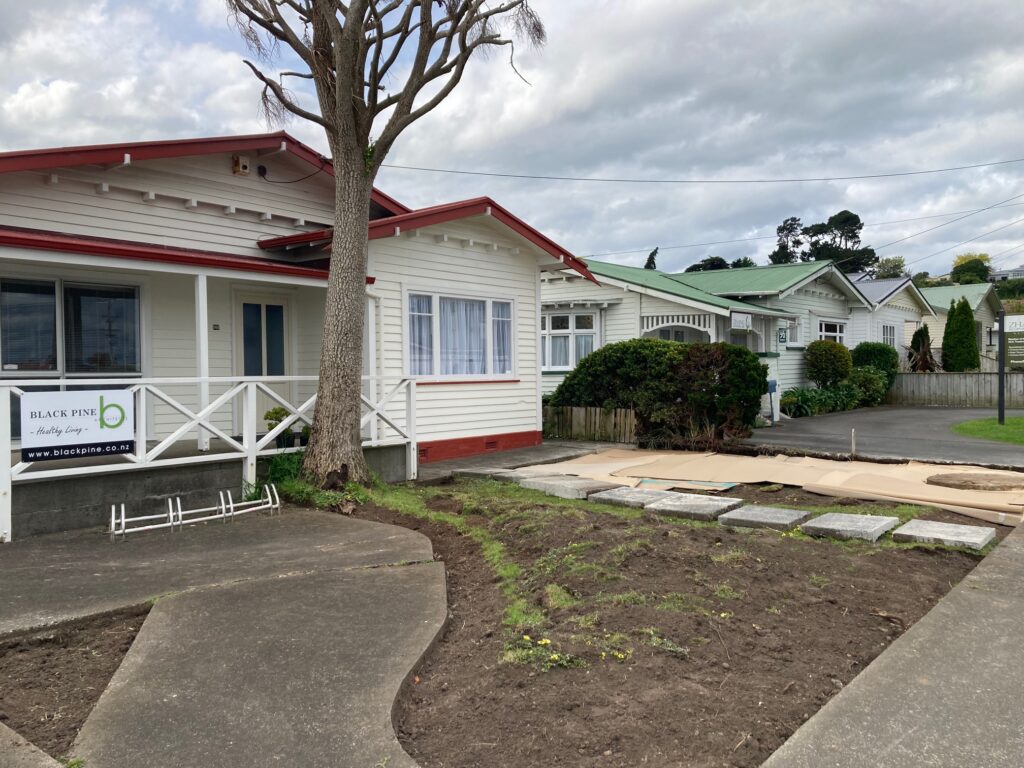
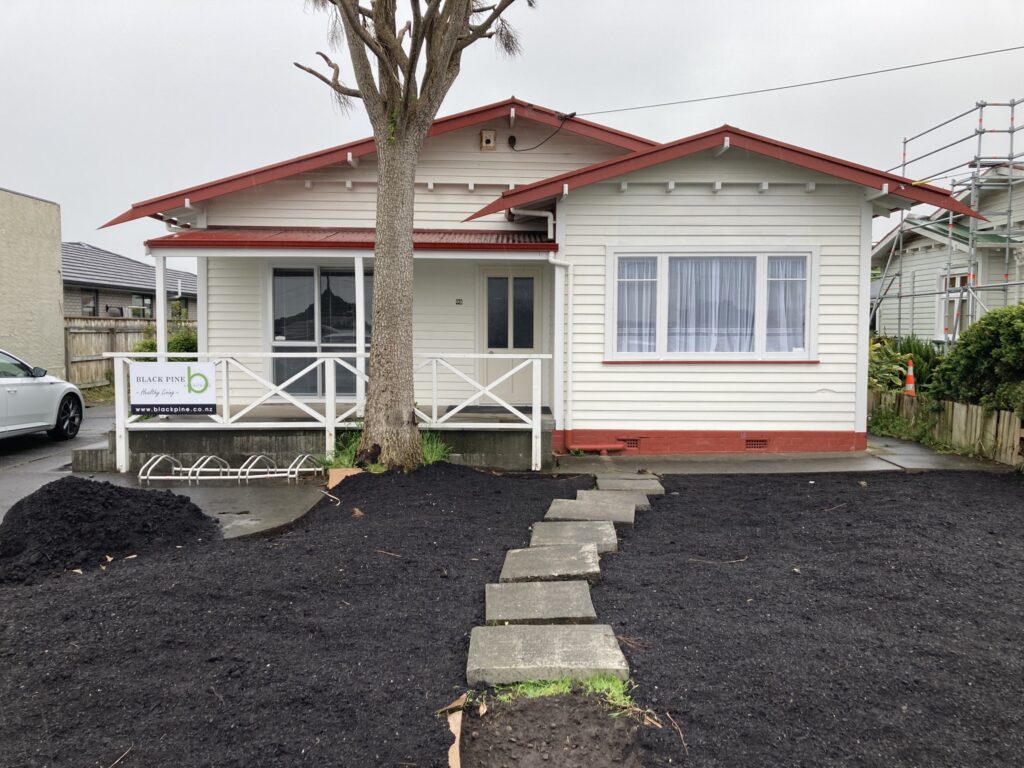
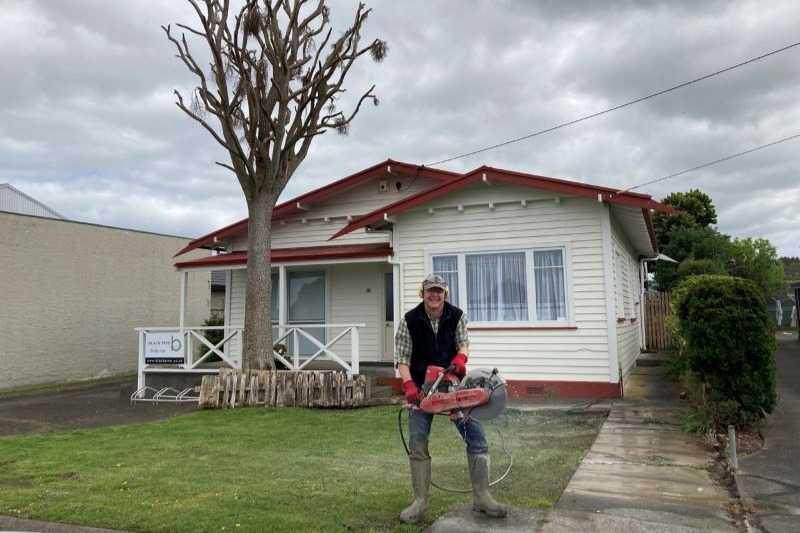
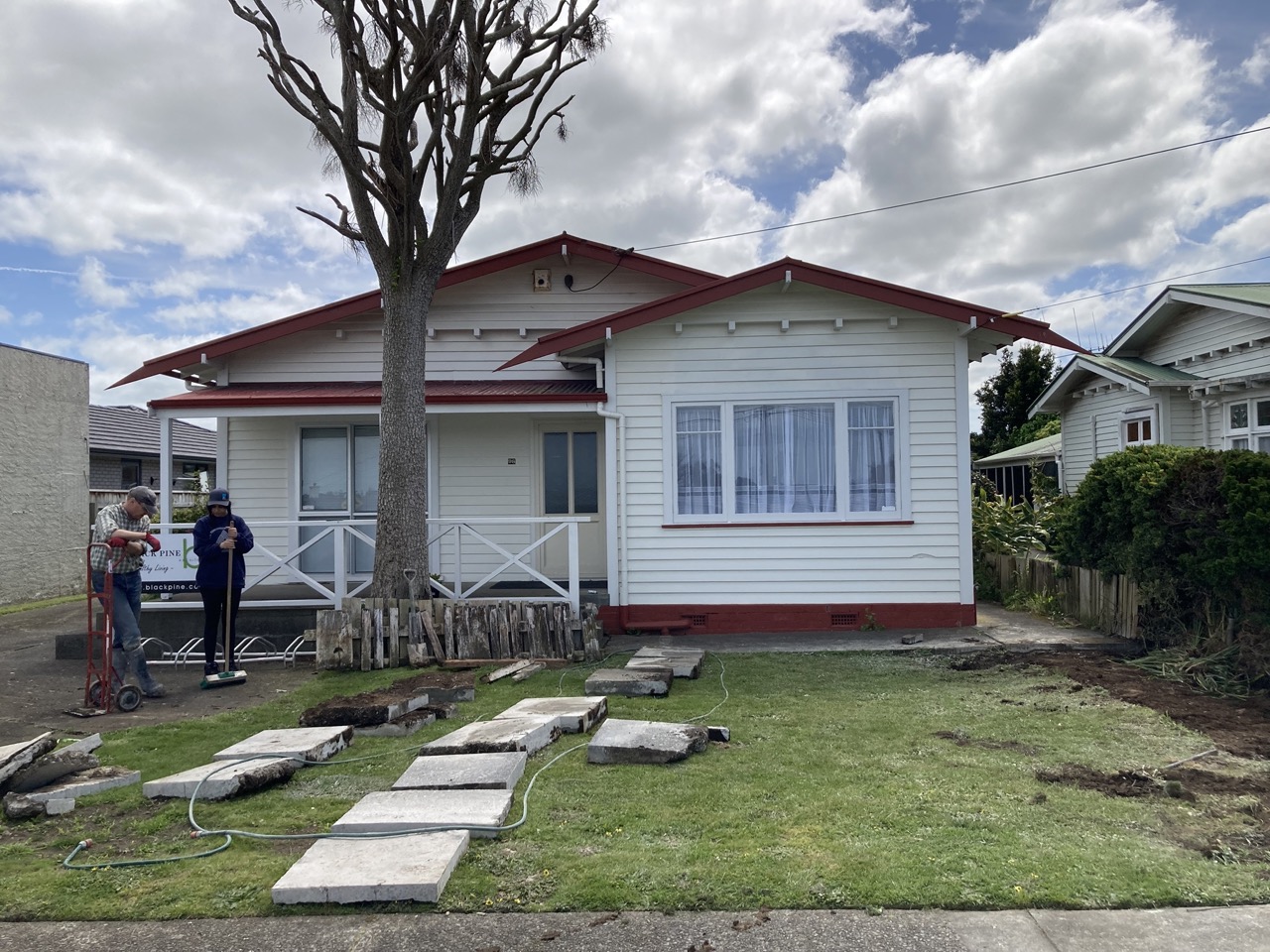
So far, we’ve cut and removed a large area of concrete (reusing some sections to form a new path), levelled out the existing lawn, covered it with a thick layer of brown cardboard (while being very diligent about removing plastic stickers and tape which won’t naturally break down in the ground), and covered the cardboard with soil. The next step is to spread a few big buckets of wildflower seed, and – fingers crossed – wait for nature to do the rest!
Why Rewilding Matters
Rewilding, even on a small scale, can have outsized benefits for the environment. By replacing a manicured, regularly mowed lawn with wildflowers, we’re creating a micro-habitat that supports biodiversity and resilience. Here’s what this type of transformation can bring:
- Increased Biomass: Lawns may look nice and clean, but they’re ecological deserts. Wildflowers, by contrast, offer varied root structures, foliage, and seasonal growth that contribute to richer soil and greater biomass.
- Pollinator Paradise: Bees, butterflies, and other insects thrive in wildflower environments. These pollinators are essential to food systems and ecosystems, and they’re in decline globally. We’d like our garden to become a small sanctuary.
- Carbon Sequestration: ‘Wild’ plants often have deeper root systems than turf grass, helping to store carbon and improve soil health.
- Stormwater Management: Wild lawns, with their deeper and more complex root systems, absorb rainwater more effectively than concrete or compacted turf. This helps reduce runoff and can recharge groundwater.
- Community Connection: The Black Pine studio is located on a busy suburban road near local shops, so we hope our wild lawn will invite curiosity, conversation, and joy. We see it as a living artwork that will change with the seasons!
The Living Building Challenge Connection
Our wild lawn project aligns with the principles of the Living Building Challenge (LBC), a rigorous performance standard for sustainable buildings that we actively encourage our clients to consider throughout their projects.
The LBC uses seven performance categories called ‘Petals’, each representing a key aspect of sustainable design. In this case, a wild lawn supports the ‘Place’ petal. The Place petal encourages projects to integrate with their ecological context, regenerate the environment, and honour the uniqueness of the site. In our situation, by removing concrete, rehabilitating the soil and planting wildflowers, we are:
- Restoring ecological function to a previously degraded site.
- Creating habitat for insects and birds.
- Celebrating native flora and seasonal cycles.
- Engaging the community through visible, accessible green space.
More broadly, the Place petal encourages thinking beyond buildings and to consider how, even on our small patch, we can help heal the land and inspire stewardship. For us, the wild lawn isn’t just a cosmetic change. It’s a small – but meaningful – act of ecological restoration and a gesture of generosity to our community.
We can’t wait to see what blooms this summer!